
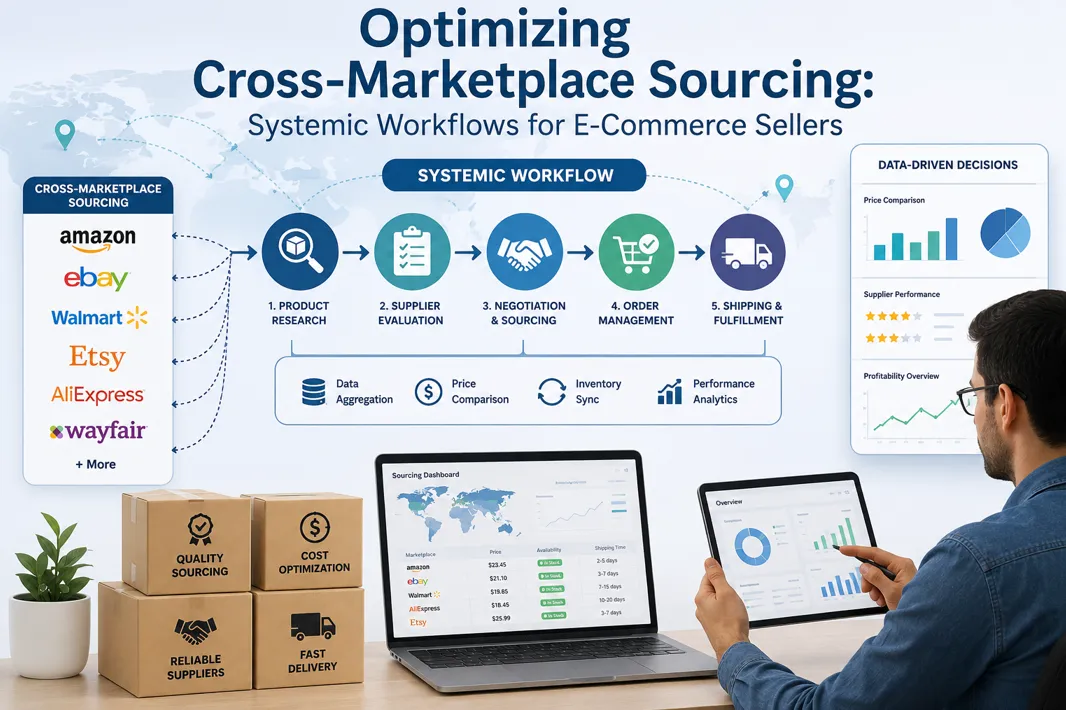
In the evolving world of e-commerce, relying on a single sourcing channel or sales platform creates operational risk. For merchants leveraging cross-marketplace supply chains—such as sourcing products from retail marketplaces to fulfill orders on alternate selling channels—success depends on catalog velocity, speed to market, and precise inventory control.
However, scaling cross-marketplace operations beyond a few dozen products exposes immediate friction points. Sourcing items without verified sales histories leads to wasted listing limits. Furthermore, supplier price spikes can wipe out margins overnight, and delayed fulfillment damages account standing.
To operate profitably at scale, sellers must implement structured data workflows that automate product validation, continuous repricing, and order fulfillment.
Technical Audits for Modern Cross-Marketplace Operations
Evaluating software for cross-channel retail arbitrage requires looking beyond surface-level feature sets. Operations teams must assess how effectively a platform automates the primary stages of the product lifecycle: discovery, catalog integration, inventory monitoring, and fulfillment routing.
A platform that only creates basic product listings addresses a small fraction of the operational burden. If your team manually searches for suppliers, checks pricing spreadsheets daily, or keys in buyer shipping addresses, critical bottlenecks remain unaddressed.
When auditing technical infrastructure, high-volume operators routinely review specialized comparisons of the best eBay to amazon dropshipping software to identify systems that consolidate competitor scraping, dynamic re-pricing, and order processing into a unified pipeline.
Sourcing Validation and Catalog Expansion Mechanics
A common mistake in cross-marketplace selling is uploading unvalidated products in bulk. Expanding catalog size without proven demand metrics clutters store listings and consumes valuable selling allowances without generating revenue.
Product sourcing must begin with verified market demand signals. Successful operators use competitor scraping tools to identify products with confirmed sales histories before listing them. Once viable items are identified, the publishing workflow must transform raw supplier descriptions into marketplace-compliant listings instantly.
Operational Phase
Manual Approach (High Risk)
Automated Approach (Low Risk)
Product Research
Speculative listing based on personal assumptions
Scraping verified winning products with pre-matched suppliers
Listing Creation
Hand-writing titles and item attributes for each item
AI-driven batch creation with formatted attributes and titles
Inventory Guardrails
Periodic manual spreadsheet checks
24/7 continuous monitoring of supplier pricing and stock levels
Order Processing
Manual purchase placement per customer transaction
Automated order routing triggered instantly upon buyer payment
Optimizing this workflow relies on three core capabilities:
- Demand-Led Discovery: Filtering competitor stores for items with proven, recent sales activity to ensure high catalog conversion rates.
- Structured Attribute Mapping: Automatically populating required marketplace attributes—such as brand, MPN, and dimensions—to maintain search visibility.
- Pre-Publish Compliance Checks: Scanning titles and descriptions against databases of restricted terms or trademarks before listings go live to safeguard account health.
Continuous Margin Protection and Automated Order Routing
Publishing search-optimized listings is only half the battle; maintaining profitability requires constant vigilance over volatile supplier data. Third-party supplier costs fluctuate constantly, supply chains experience sudden stock depletion, and marketplace fees change without warning.
Managing these metrics across thousands of listings requires automated rules engines:
- Dynamic Floor Pricing: Establishing baseline margin rules so that retail prices automatically adjust upward whenever supplier costs increase.
- Automated Stock Pausing: Temporarily pausing active listings the moment a supplier’s stock drops below a safe threshold, preventing unfillable orders.
- Hands-Off Order Fulfillment: Routing buyer shipping details directly to suppliers automatically to minimize fulfillment delays and eliminate manual entry errors.
Additionally, store operators must choose between two primary account management configurations:
- API Integration Mode: Connects directly via official marketplace APIs for rapid cloud synchronization, ideal for high-volume, multi-store operations.
- Non-API Stealth Mode: Runs via browser automation, mimicking human interaction patterns to maintain a clean account footprint for newer seller profiles.
Strategic Implementation Plan for Multi-Channel Growth
Transitioning from a manual, high-friction retail workflow to an automated cross-marketplace enterprise requires a structured deployment plan:
- Audit Labor and Operations: Identify repetitive daily tasks—such as checking supplier prices, uploading tracking numbers, or searching for products—and target them for software automation.
- Configure Strict Margin Safeguards: Set minimum profit percentages and floor pricing rules before enabling automated repricing engines.
- Implement Automated Sourcing and Fulfillment: Deploy integrated software tools to validate products, sync inventory continuously, and route orders to suppliers without manual intervention.
By replacing manual processes with structured automation, e-commerce sellers shift their focus from daily administrative upkeep to strategic catalog growth, channel expansion, and long-term brand equity.