
Angola becomes more interesting when it is not reduced to one image. I read the detailed guide about Angola and liked how much it explains in one place. It gives the feeling of a country with a long Atlantic coast, cities, plateaus, dry south, music, food, difficult history and daily life that still depends on family and local tradition.
The first thing that stands out is geography. Angola is not only a coastal state with Luanda facing the ocean. It is also a country of escarpments, inland plateaus, rivers, northern regions and desert areas near Namibia. The coast has fishing, ports, humidity and urban pressure. The highlands around Huambo and Lubango feel cooler and more open. Farther south, land becomes drier, the road stretches longer, and the link with livestock, water and seasons becomes visible.
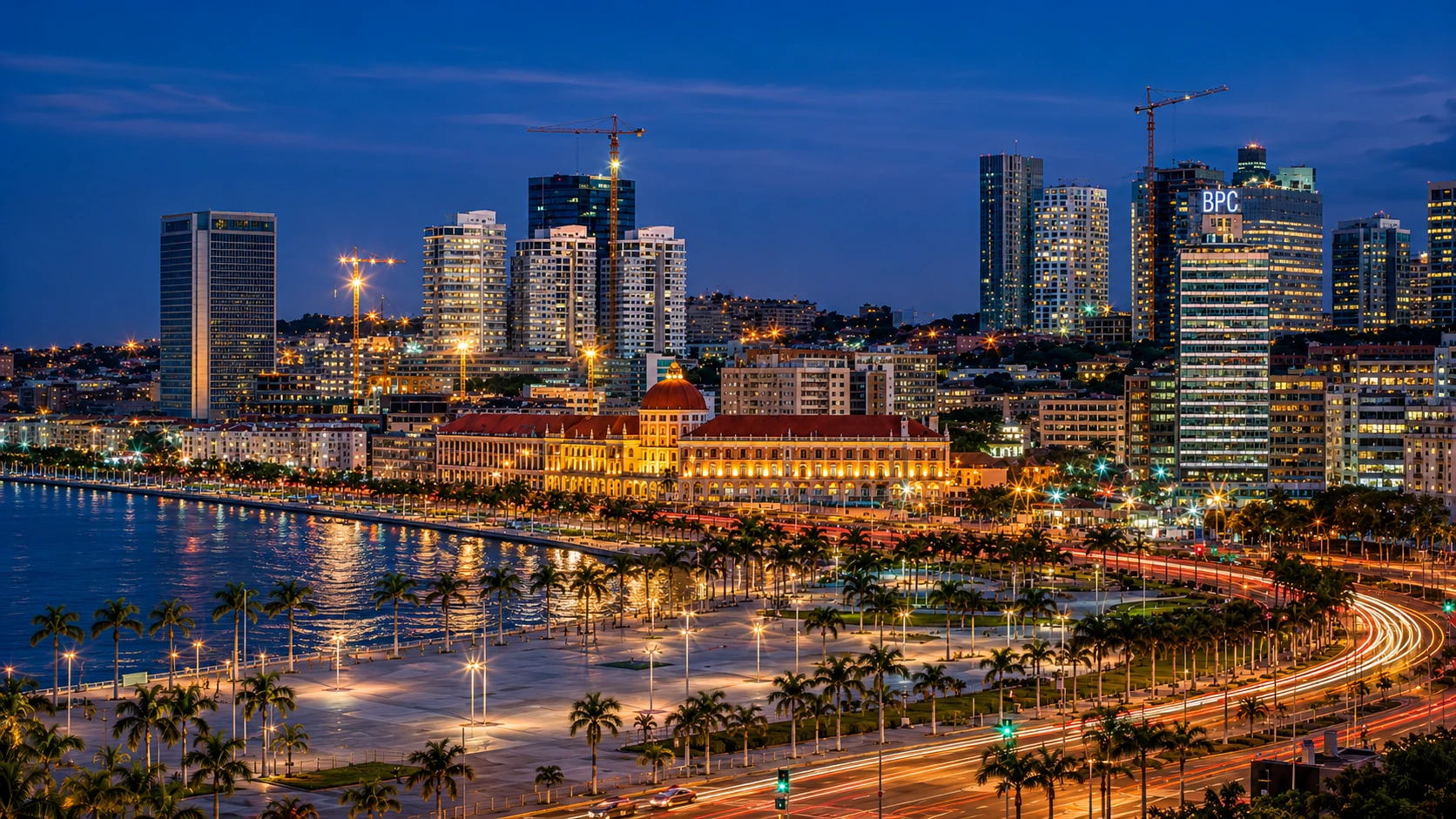
Luanda is probably the strongest symbol of modern Angola. It is crowded, ambitious and difficult at the same time. Office towers, new roads and shopping centers stand close to musseques, informal neighborhoods where daily life happens in courtyards, narrow streets and small shops. The city shows oil wealth, but also the pressure created by fast urban growth. Traffic, housing, water, schools and hospitals are not abstract problems here. They shape the day of millions of people.
What makes Angola especially powerful is the way history remains present. Long before the Portuguese arrived, the region had strong kingdoms, including Kongo and Ndongo. The name Angola itself is connected with the title ngola, used by rulers of Ndongo. Queen Nzinga remains one of the great historical figures of the country, remembered for resistance, diplomacy and political strength. Later came colonial rule, the Atlantic slave trade, independence and then a long civil war that ended in 2002.
The article also explains well that Angola is not culturally uniform. Portuguese is the official language and the language of school, government and business, but local languages still carry family identity and regional life. Umbundu, Kimbundu, Kikongo, Chokwe and other languages are heard in homes, markets, churches, weddings and funerals. This creates a layered identity where modern urban Angola and older community traditions exist side by side.
Religion is another important part of daily life. Angola is mainly Christian, with Catholic, Protestant and independent churches playing a large role in communities. At the same time, respect for ancestors, elders, blessings and traditional practices has not disappeared. Sunday can be a social event as much as a religious one. People dress carefully, attend church, meet neighbors and keep community bonds alive.
Nature gives Angola another dimension. Kalandula Falls, Serra da Leba, Kissama National Park, Iona National Park, Namib coast and the rare Welwitschia plant all show a country that could become better known among travelers. Angola is not yet a mass tourism destination, and that makes it attractive for people who want space, strong landscapes and places that still feel less commercial.
Food and music make the country easier to feel. Funje, muamba, fish, beans, cassava, palm oil and hot sauces show how Angolan kitchens connect the coast, countryside and family gatherings. Semba, kizomba and kuduro show a different kind of energy. Music is not background decoration in Angola. It speaks about cities, youth, love, humor, struggle and identity.
What I liked most about the guide on Ducky Tips is that it presents Angola as a real country in motion. It does not hide the hard parts, but it also does not make them the whole story. Angola has oil, diamonds, ports, railways, markets, churches, deserts, waterfalls and crowded neighborhoods. It is still rebuilding itself, but it also has deep cultural confidence and a strong sense of place.