
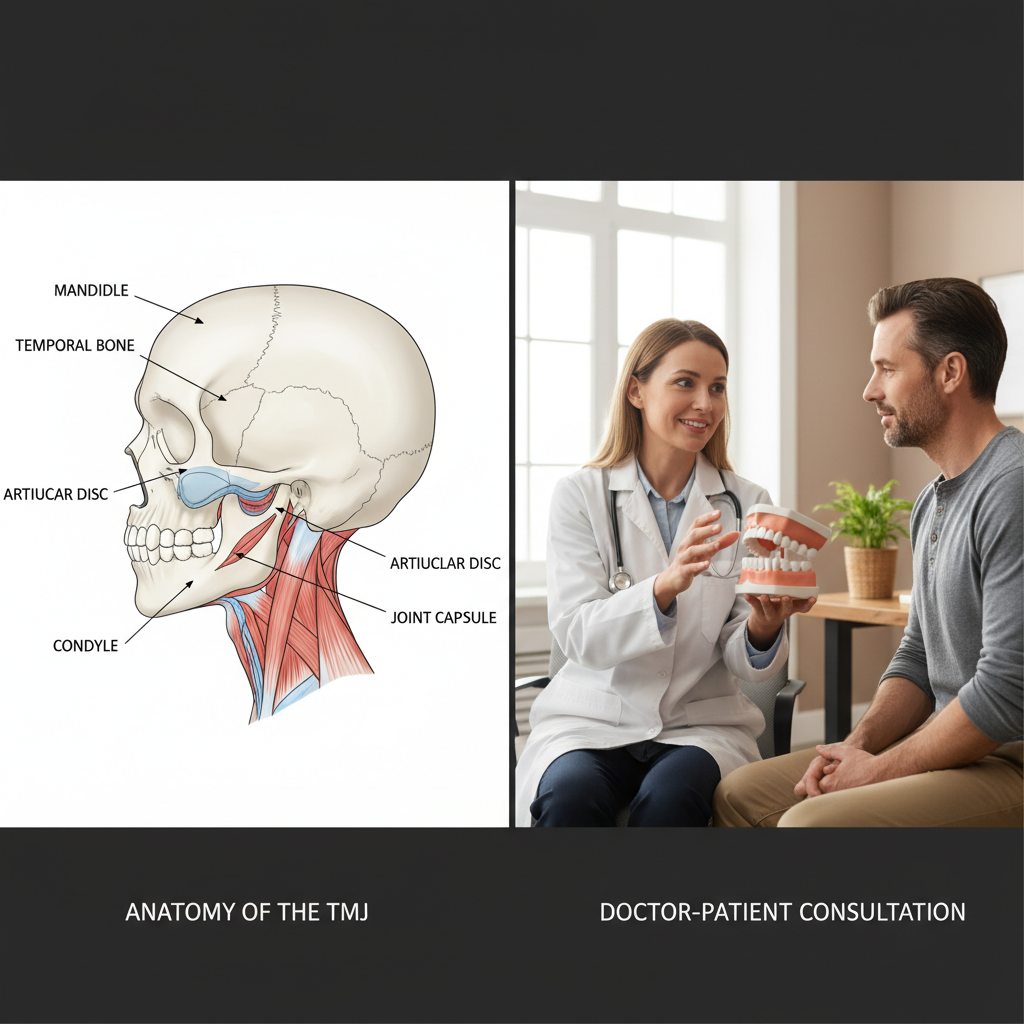
The human face is a complex structure where bones, joints, muscles, and teeth must work together with remarkable precision. While many people associate the jaw mainly with chewing, its role extends far beyond basic function. Jaw alignment influences facial balance, joint health, breathing patterns, and even posture.
When the jaw system functions properly, these processes occur naturally and without discomfort. However, when structural problems develop, they can lead to a wide range of symptoms that affect everyday life. Understanding the relationship between jaw structure and overall facial health can help explain why specialized evaluation is sometimes necessary.
The Jaw as a Structural Foundation
The lower jaw, or mandible, serves as the only movable bone in the face. It connects to the skull through the temporomandibular joints (TMJ), located on each side of the head near the ears. These joints allow the jaw to move in multiple directions, enabling activities such as chewing, speaking, and swallowing.
For the jaw system to work correctly, several elements must remain balanced:
-
The position of the upper and lower jaws
-
Alignment of the teeth and bite
-
Health of the temporomandibular joints
-
Coordination of facial muscles
Even small imbalances in one part of the system can create stress in other areas, which may eventually lead to discomfort or functional problems.
Early Signs of Jaw System Imbalance
Jaw disorders often develop gradually, and early symptoms may appear subtle. Some individuals notice mild clicking sounds when opening their mouth, while others experience occasional jaw stiffness.
Common early indicators include:
-
Jaw clicking or popping
-
Facial muscle fatigue after chewing
-
Tension headaches near the temples
-
Mild difficulty opening the mouth fully
-
Uneven pressure when biting
Because these symptoms may appear minor, they are sometimes ignored until the condition progresses further.
The Role of the Temporomandibular Joint
The temporomandibular joint is one of the most complex joints in the human body. It combines hinge-like and sliding motions, allowing the jaw to move smoothly in multiple directions.
Inside the joint is a small disc made of cartilage that cushions the bones during movement. If this disc becomes displaced or deteriorates, the joint may begin to function abnormally.
As TMJ disorders progress, patients may experience:
-
persistent jaw pain
-
grinding sensations within the joint
-
limited mouth opening
-
difficulty chewing
-
facial discomfort that radiates toward the ear or neck
Severe TMJ degeneration can even change the position of the jaw, affecting the bite and facial symmetry.
Jaw Position and Breathing
Another important aspect of jaw anatomy is its relationship to the airway. The lower jaw helps support the tongue and soft tissues at the back of the mouth. If the jaw sits too far back, the airway may become narrower.
This narrowing can contribute to breathing difficulties during sleep, including obstructive sleep apnea. Individuals with airway-related jaw issues may experience:
-
loud snoring
-
restless sleep
-
daytime fatigue
-
morning headaches
In certain cases, correcting jaw alignment can improve airway space and breathing patterns.
When Structural Treatment Becomes Necessary
Many jaw conditions can be treated with conservative approaches such as orthodontics, splints, or physical therapy. However, when structural abnormalities of the jaw bones or joints are present, these treatments may not fully resolve the issue.
Corrective jaw surgery may be recommended for conditions such as:
-
severe bite misalignment
-
advanced TMJ disorders
-
facial skeletal deformities
-
breathing problems related to jaw position
These procedures aim to reposition the jaws so that the teeth, joints, and muscles function together more efficiently.
The Importance of Specialized Expertise
Because the jaw system involves multiple anatomical structures, treating complex cases requires specialized training in facial surgery. Oral and maxillofacial surgeons are trained to diagnose and manage conditions affecting the bones and joints of the face.
Patients dealing with advanced jaw problems, structural imbalances, or complex TMJ disorders may seek consultation with an experienced Jaw Surgeon Dallas who focuses on comprehensive evaluation and advanced surgical techniques.
Long-Term Benefits of Jaw Correction
When structural jaw issues are properly addressed, patients often experience significant improvements in both function and comfort. Benefits may include:
-
improved chewing ability
-
relief from chronic jaw pain
-
better facial balance
-
improved breathing during sleep
-
increased overall quality of life
Although recovery requires time and careful follow-up care, restoring proper jaw alignment can provide lasting results.
Final Thoughts
The jaw is more than a simple hinge that opens and closes. It is a central component of facial structure and plays a critical role in many everyday functions. When the jaw and its joints are properly aligned, they support comfortable movement, balanced facial structure, and healthy breathing.
Recognizing the signs of jaw system imbalance and seeking appropriate evaluation can help prevent minor symptoms from developing into more serious conditions. With advances in modern maxillofacial care, many patients can achieve improved comfort and function through carefully planned treatment.